Fresh From Our Contributing Authors What's a "contributing author"?
Integrating University Degrees with Permaculture Education and Community Development in Kenya
Aid Projects, Community Projects, Demonstration Sites, Education Centres — by Sheena Shah March 15, 2013

Putting in a Papaya Circle at Nyumbani Village
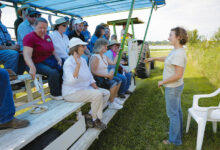
In an innovative PDC program, following the PRI ‘Master Plan’ template, University students from University of Wisconsin Stevens Point (UWSP) learn permaculture alongside Kenyan students, project managers and small-holder farmers at different community development projects integrating permaculture into their work. The course, which is spread out over three weeks to allow lots of time for practical implementation activities, gives ample opportunity for students to learn about implementing permaculture in a community development context, whilst providing real and long-lasting change for the orphan children and small holder farmers who are beneficiaries of these projects.
Comments (3)Iowa and South Dakota Approach 25 Percent Electricity from Wind in 2012: Unprecedented Contribution of Wind Power in U.S. Midwest
Energy Systems — by Earth Policy Institute
by J. Matthew Roney, Earth Policy Institute
Defying conventional wisdom about the limits of wind power, in 2012 both Iowa and South Dakota generated close to one quarter of their electricity from wind farms. Wind power accounted for at least 10 percent of electricity generation in seven other states. Across the United States, wind power continues to strengthen its case as a serious energy source.
A Journey of Transition: Becoming a Professional Permaculture Designer – Part 3
General — by Dan French March 12, 2013
by Dan French

Photo © Craig Mackintosh
This time, in Part 3 of this series discussing my journey towards becoming a professional permaculture designer, I will be talking about marketing, knock-backs and my progress since the last article. Part 2 of this series focused on two large issues facing many of us trying to build our own business, commitment and confidence. Reflecting on these points, the pressure of these emotions is ongoing. I’m glad to report however, the series of strategies I outlined in Part 2 are helping me in both of these areas. Despite this, I am still finding that my momentum seems to ebb and flow. I found that Christmas in particular, the time most people bar all thoughts of work and concentrate of having some time off, had a significant impact. I gave myself a leave pass to freshen up, which was both good and bad. Good because I spent some quality time with my family — time we all enjoyed as they didn’t have to listen to my constant strategizing and questioning of where I’m headed — and because I didn’t feel the need to unload on them. Bad because the momentum I had gained leading up to Christmas was sadly lost, much like my hopes for a particular present I had long been asking for. All I received was several pairs of very nice socks….
Comments (11)Permaculture and Slavery: A System Analysis
Economics, People Systems, Society — by Rhamis Kent March 11, 2013

Something interesting happens to you once given an opportunity to take a well-taught, well-presented, and properly contextualized Permaculture Design Certificate (PDC) course. You are provided with new tools with which to view virtually every conceivable topic through very different eyes – in this instance, economics & history.
The American Civil War, for example, could easily be understood as America’s first energy war. It was also explicitly a war over capital – the most important capital the United States held at the time, enabling it to become the world’s greatest, most influential economic power with the eventual emergence of mass industrialization & financialization globally.
Comments (14)Seeking Support for Worthy African Participants to Attend PDC and Internship in Konso, Ethiopia in April-May 2013
Aid Projects, Community Projects, Courses/Workshops, Demonstration Sites, Education Centres, Village Development — by Alex McCausland
Editor’s Note: As many of you know, we (the PRI) seek to spread permaculture take-up to all people everywhere, but a main focus, as we are able to finance it, is to help establish and support self-replicating permaculture demonstration/education sites in some of the world’s neediest regions. Many of you will have followed Alex’s noble and determined/persistent efforts in Ethiopia (see Alex’s author profile), and I trust you’ll see that he, his team, and the valuable work they are undertaking is more than deserving of our support and encouragement. I have personally worked hard to build traffic on this site over the last several year for the very purpose of being able to focus more eyeballs on worthy projects such as this. I sincerely hope you’ll take the time to read this post, and assist if you can. And, if you’re not in a position to help financially right now, then please at least take the time to share this page with your contacts via email, Facebook, etc. Thanks in advance to you all for your continued support!

Greetings to all of you Permaculturists out there. This is coming from Konso, south Ethiopia where we were able to establish our Strawberry Fields Eco Lodge (SFEL) permaculture demonstration site as a PRI Master Plan satellite site in January. As a PRI site we run trainings for international students, whose fees help us fund local students (i.e. students from Konso to get onto the courses we run — we mostly work with school teachers and students to start and mobilise our schools project sites) to take the training alongside the internationals themselves. We are running a PDC-Internship Combo this spring and have been promoting it here and elsewhere with updates on our work in Konso. However, much of the interest in taking these courses at the moment is coming from students elsewhere in Africa (e.g. Sudan, Zimbabwe, Uganda, Tanzania, etc.) where people are not exactly swimming in spare cash either. Hence we are looking for support to offer scholarships to help these African students attend our program. For each international (African) student that attends, another local Ethiopian student will be able to take the training, working towards the development of our local community outreach program — the Permaculture In Konso Schools Project — so you would be helping two people that need funding to get PDC certified. If anybody out there has the resources and the big heart to help us in this endeavour then their reward is in the good thing that they do. Please see more info on the PDC and internship programs here and here, respectively.
Applicants seeking Support to attend the April/May PDC-Internship are:
Comments (2)Ron Finley: A Guerilla Gardener in South Central LA
Aid Projects, Community Projects, Health & Disease, Urban Projects — by Kim Hayes
In this inspiring TED talk, Ron Finley teaches us all how to be ‘Gangster Gardeners’ and how to let your shovel be the weapon of choice. In his own words, "Growing your own food is like printing your own money". Let that be our new battle cry across the land. Ron and his volunteer gang are showing us how to end the scourge of cities — ‘the food desert.’
Comments (2)Hand Tools
Courses/Workshops — by Danial Lawton

The use of small hand tools in farming can be found all over the world, however in the so-called ‘developed‘ world many of these tools, and the skills in how to use, maintain and repair them, have been lost, as people are increasingly ensnared in dependence on fossil fuel powered machinery.
The very interesting thing is that almost everywhere you go around the world where they still use small cutting hand tools (sickles), you will find tools that are almost the same — with a very similar size and similar curved shape.
The education in the correct use of such tried and tested tools can help in reducing our reliance on fossil fuels. We all need to put away our small machinery and get back to our roots of hand tools. I have had many of conversations on the fact that you can do more work in a shorter amount of time with small machinery when compared to hand tools. I recall such a conversation while I was working at the Permaculture Institute (Tagari Farm) many years ago and a challenge was put to me: who can cut faster — me with my machete and my hook or the challenger (who had done council work as a brush cutter) with a brush cutter with a blade on?
Comments (7)PDC in Austria: May 9-20, 2013
Courses/Workshops — by Fraser Bliss

Bliss Permaculture is happy to announce that it is holding a Permaculture Design Certificate Course in the beautiful rolling foothills of the Austrian Alps in May 2013.
Comments (0)Strawberry Fields Eco Lodge: Report on Piped-Water System, Current Status and Design Update (Ethiopia)
Aid Projects, Commercial Farm Projects, Community Projects, Demonstration Sites, Education Centres — by Alex McCausland March 8, 2013

We are an eco-lodge and Permaculture training centre based in Konso, south Ethiopia.
Water Source
Our only current water source for potable water and garden irrigation is the Konso Town municipal supply, which is drawn from a bore-hole situated just across the road from our site entrance. The supply facility is a manned pumping station with an electric water pump, backed up by a diesel pump for times of power outage, which are frequent. Even this back-up pump may fail on occasion due to lack of fuel or mechanical fault. There are also times when there is a problem in the water line, meaning that the municipal water supply is far from reliable. There are occasional water supply failures of up to a week, perhaps once a year, and more frequent shorter failures of 1 to 3 days every few months. These failures seem to be more frequent during the dry season when there is additional pressure on the system to supply greater community needs. When there is water, the supply is usually on for a couple of hours in the morning 5am – 7am and evening 4pm – 6pm.
The main supply line enters our site directly from the water pump station under the road via the storm drains situated just to the north of the old foot entrance, delivered by a ¾” poly-pipe.
Comments (3)Redesigning Civilization – with Permaculture
General, Presentations/Demonstrations — by Toby Hemenway
Modern agriculture, industry and finance all extract more than they give back, and the Earth is starting to show the strain. How did we get in this mess and what can we do to help our culture get back on track? The ecological design approach known as permaculture offers powerful tools for the design of regenerative, fair ways to provide food, energy, livelihood, and other needs while letting humans share the planet with the rest of nature. This presentation will give you insight into why our culture has become fundamentally unsustainable, and offers ecologically based solutions that can help create a just and sustainable society. This is the sequel to Toby’s popular talk, "How Permaculture Can Save Humanity and The Planet, but not Civilization."
Comments (5)Subtropical Edible Forest Gardens Design Intensive with Eric Toensmeier
Courses/Workshops, Food Forests — by Eric Toensmeier
What: Advanced Permaculture Design with Eric Toensmeier, author of Perennial Vegetables and co-author of Edible Forest Gardens with Dave Jacke
When: April 5-10, 2013
Where: Hosted by Earth Learning in Homestead, Florida, USA
Instructor: Eric Toensmeier
You will learn how to design and plant a food forest, hands-on!
Edible forest gardens produce delicious food while imitating natural forest ecosystems. Trees, shrubs, herbs, vines, groundcovers and fungi can combine to form healthy edible ecosystems. Design and plant selection help provide fertility, control of weeds and pests, and more.
How can you design an edible garden that works like a healthy ecosystem? Learn simple guidelines, based on real experience, for designing mixed-species polycultures of useful perennials. Small-group design exercises will give you the tools to create productive harvests and positive relationships between plants in your forest garden.
Comments (0)Where Has All the Ice Gone?
Global Warming/Climate Change — by Earth Policy Institute
by Emily E. Adams, Earth Policy Institute
As the earth warms, glaciers and ice sheets are melting and seas are rising. Over the last century, the global average sea level rose by 17 centimeters (7 inches). This century, as waters warm and ice continues to melt, seas are projected to rise nearly 2 meters (6 feet), inundating coastal cities worldwide, such as New York, London, and Cairo. Melting sea ice, ice sheets, and mountain glaciers are a clear sign of our changing climate.

In September 2012, sea ice in the Arctic Ocean shrank to a record low extent and volume. The region has warmed 2 degrees Celsius (3.6 degrees Fahrenheit) since the 1960s—twice as much as lower latitudes. With less snow and ice to reflect the sun’s rays and with more exposed ocean to absorb heat, a vicious cycle leads to even warmer temperatures. Thinner ice combined with rising temperatures makes it increasingly difficult for the sea ice to recover. The historically ever-present white cap at the top of the globe could disappear entirely during the summer within two decades.
Comments (7)Ecosystem Mimicry in Subtropical Florida
Land, Plant Systems, Trees — by Eric Toensmeier March 6, 2013
Ecosystem mimicry is one of the concepts at the heart of permaculture. The food forest or edible forest garden, for example, strives to replicate the structure, relationships, and successional pathways of natural forest ecosystems. I’m fortunate to have had the chance to travel and teach in different regions and ecosystems. In many cases I return and teach on the same site every year. This gives me a chance to get to know the ecosystem deeper and deeper, and try experiments and see what happens.

Pods of the lovely native nitrogen fixer Lysiloma latisiliquum
Residential Landscaping with Permaculture
Land — by Jonathan Davis

What do you think about residential sprinkler systems? You know, the in-ground kind of sprinkler system used to keep the grass green in the front yard? Well, I am not a fan. As a landscaper, many people have told me how they have grown frustrated with such systems in their yard, how they want to go to xeriscaping and how the droughts we have in south Texas lead to restricted watering and dead plant material. The front and back lawn can go as far as I’m concerned. I know many of us have this same view, however I don’t mind a little area of nice pleasant grass. It’s the waste of space, waste of nutrients and other misused resources I don’t like. Picture this, a small grassy area in your front yard and beautiful thickly mulched beds all over the remaining yard. This is the best of both.
Comments (7)Get Ready for International Permaculture Day, May 5, 2013
Community Projects, Conferences, Courses/Workshops, Presentations/Demonstrations, Social Gatherings — by International Permaculture Day

International Permaculture Day is approaching fast and it’s time to think about how you will celebrate it this year and help support and promote the event. International Permaculture Day (IPD) showcases the practices of permaculture to the public. Businesses, groups and individuals show permaculture in action – through markets, demonstrations, films, ‘open houses and gardens’, and local events in city and country. Last year we held the very first international day with some 125 events in 26 countries — take a look at the amazing diversity of celebrations that took place worldwide: www.permacultureday.org/eventcategory/australia/?etype=past
IPD 2013 promises to be an even bigger, bolder and better day this year and will have the theme of Grow Local! to highlight the benefits of going local, including growing your own food. As with last year, we’ll be interviewing leading permaculturalists and bioneers. Please add your events to the IPD calendar and sign up for regular updates on our website and social media channels:
Comments (0)