Fresh From Our Contributing Authors What's a "contributing author"?
Tour of Geoff Lawton’s Online PDC and Farm!
Courses/Workshops — by Geoff Lawton May 8, 2013
Hi, it’s Geoff here.
Last Sunday was International Permaculture Day and the launch of my new online permaculture course.
We had a lot of people visit my farm on Sunday and a lot of people decided to do an online course with me. In fact some of them turned up to meet me.
Check out this YouTube video of the farm tour and get a sneak peek at what’s going on inside my new course. We have already had over 1500 comments from people doing the course and watching all the videos and commenting how much they love it.
Cheers,
Geoff
P.S. I have a very exciting free bonus I’m going to be releasing tomorrow. This is something that I’ve always wanted to do and it’s worth more than the price of the entire course and my other 6-pack of Geoff Lawton Permaculture DVD bonuses in their own right. It’s going to be yours absolutely free when you do my new online permaculture course.
You’re not going to believe what it is!
Further Watching:
Comments (17)Bread for all – Community Oven
Building, Community Projects — by Elisa Fusi

I met Fabrice at the top of the hill in the lovely forest at Whangateau in New Zealand, a scenic spot in the middle of the North Island.
Fabrice was kind and smiling as usual, with an honest desire to talk about his project and share pure wisdom on natural building and carpentry. He has travelled extensively and has been working as a baker all his life.
‘Bread baking is a magic craft’, he said with a charismatic voice.
Comments (0)Where Hope Flows
Conservation, Fish — by George Monbiot
If the “hardest-worked river in the world” can recover to this extent, almost anything is possible.

River Wandle
Photo: Keith Rose
Warning: this article begins with a spoiler. If you have not read The Road already and intend to do so, please skip the first three paragraphs.
Cormac McCarthy’s novel The Road, which I still believe is the greatest environmental work ever written, ends with the shock and beauty that runs through so much of the book:
Once there were brook trout in the streams in the mountains. You could see them standing in the amber current where the white edges of their fins wimpled softly in the flow. They smelled of moss in your hand. Polished and muscular and torsional. On their backs were vermiculate patterns that were maps of the world in its becoming. Maps and mazes. Of a thing which could not be put back. Not to be made right again. In the deep glens where they lived all things were older than man and they hummed of mystery.
The trout are a cipher for all that has gone, in this novel about a world that has lost its biosphere. I think I know why McCarthy chooses to invest them with this role: in a way that is hard to explain, trout seem to be more alive than most other animals. Perhaps it has something to do with their flickering changes of mood – extreme caution, then bold display, skulking in the shadows, then splashing on the surface of the river, sometimes leaping clear of the water – their great speed, their extraordinary beauty, their ability to disappear then flash back into sight, their remarkable range of colour and pattern and shape. And the presence of trout means that other things are alive: they cannot survive and breed without clean, clear water, clean gravel beds and an abundant supply of insect life.
Comments (0)Haomekka – Permaculture in Mexico (video)
Community Projects, Demonstration Sites, Eco-Villages — by Serena Aurora May 7, 2013
Somewhere in Mexico lives a small community few have heard of. Only by word of mouth can you hear about it. This community has 17 members and has opened its doors to others. They grow their own food, and try to live sustainably using great concepts and bio-construction. This community working together has resulted in a place of creativity and knowledge. It is so versatile and such an exciting place to be, with music, art, pottery, building, and projects within the local community. Within the community they make natural soaps, herbal remedies, hand crafted jewellery and organic coffee.
This film was created so I could share my experience of what it is like to live within a community. I was really inspired by this alternative way to live and feel there is much I have taken from this experience that I will incorporate within my own life.
I was fortunate enough to hear about this place through word of mouth by another fellow traveller in Guatemala. I stayed nearly three weeks and found it very difficult to leave. There are many positive aspects to this way of life, which I hope this film captures.
Comments (4)Food from Perennial(ising) Plants in Temperate Climate Australia for March 2013
Food Plants - Perennial, Medicinal Plants — by Susan Kwong

This is the early Autumn post for the ongoing research project about perennial plants and self-perpetuating annual plants providing food in temperate climate Australia. The original article introducing this project, stating its aims, and providing participant instructions, can be found here. Growers are sending me information on a month-by-month basis, then this information is collated and published the following month. All previous posts from this series can be found by clicking on my author name (Susan Kwong), just under the post title above.
I have changed the format this month to make it easier on some of my typing fingers that were caught in a car door, but by next month we’ll be back to the normal format. Please refer to previous articles for further information on the plants listed below.
Comments (1)On Being Wrong (TED video)
People Systems, Society, Village Development — by Stefan Boone
Comments (2)The miracle of your mind isn’t that you can see the world as it is. It’s that you can see the world as it isn’t. — Kathryn Schulz
GM Crops and Water – A Recipe for Disaster
GMOs, Health & Disease, Soil Erosion & Contamination, Water Contaminaton & Loss — by I-SIS
A fully referenced and illustrated version of this article is posted on ISIS members website and is otherwise available for download here.
Genetically modified foods are a threat to our dwindling water supplies; they are less water-efficient and contaminate fresh water
Genetically Modified (GM) crops are widely recognised for their potential to damage both human health and the environment. Evidence is now accumulating of the contamination of streams, rivers, rain, as well as groundwater with GM-associated chemicals including Monsanto’s glyphosate-based herbicide, while genetic elements such as antibiotic resistant genes are emerging in water-borne microbes. Further, GM crops have been shown to be less water efficient, corroborating farmer’s reports of failing GM crops during droughts. Industrial farming in general has been shown to be ill-adapted to extreme weather events such as hurricanes as well as droughts; and GM crops are not expected to do any better.
Fomenting Ferment
Courses/Workshops, Fermenting, Processing & Food Preservation — by Albert Bates
by Albert Bates

Sandor Katz lives a couple hours across Tennessee from us, so on a delightful April weekend we decided to spend four days attending his Wild Fermentation Intensive. Sandor is quite the celebrity these days — after profiles in The New York Times Magazine, The New Yorker, and Michael Pollan’s new book, Cooked, Sandor’s own encyclopedia, The Art of Fermentation, still in hardcover, has galloped through several printings for Chelsea Green. Readers of Resilience will find scores of references to Sandor over the past few years, as sustainability bloggers have come to recognize the importance of fermentation to sustainability.
Comments (2)PRI Accredited 72h Permaculture Design Certificate (PDC) Plus 4-Week Internship Courses: Konso, Ethiopia (September, 2013)
Courses/Workshops — by Alex McCausland May 6, 2013
This 13-day practical and demonstrative PDC will take place in Konso, south Ethiopia, from September 2nd to 14th, 2013, at Strawberry Fields Eco Lodge. It has a focus on application of Permaculture to communities in the developing world; however as a PRI accredited PDC the syllabus covers all the major topics in Mollison’s Designer’s Manual and will equip participants with the conceptual tools to design for any bioregion. The PDC will also be followed by a 4 week group internship which will give participants the chance to gain practical experience of application of the knowledge and skills gained during the PDC.

Lead Facilitator: Alex McCausland
Co-facilitator: Abel Teshome
PDC Dates: September 2 – 14, 2013
Internship Dates: September 16 – October 12, 2013
Location: Konso, South Ethiopia
Venue: Strawberry Fields Eco Lodge
PDC Cost: See bottom of this page.
Internship Cost: See bottom of this page.
Cost Includes: Course fees, food and camping for the period of the course (accommodation upgrades are available, see pricing below)
Excludes: Transport, accommodation en-route, travel insurance, etc.
PDC Documents:
- Application Form for Registering (130kb PDF)
- Welcome and Orientation (60kb PDF)
Internship Documents:
- Internship: Application Form for Registering (130kb PDF)
- Internship: Welcome and Orientation (60kb PDF)
Investing – Part II
Consumerism, Courses/Workshops, Education, Ethical Investment, Society, Village Development — by Kenton Zerbin May 4, 2013

All photos © Craig Mackintosh
In my previous article I stressed how there is no sounder thing to invest in than a) Yourself and B) Community.
In this article I want to share some of the simple ways one can invest in oneself. For some this may translate and lead to finding meaning, a career and community — after all what we are ultimately talking about here is finding connection. For some this will serve as one more swift kick in the butt to get out the door and be the change you want to see in the world. No matter who you are, I hope you find this hopeful, inspiring and informative.
Options for investing in yourself:
Comments (3)International Permaculture Day at the PRI’s Zaytuna Farm, NSW, Australia (May 5, 2013)
Presentations/Demonstrations, Social Gatherings — by Bonnie Freibergs May 3, 2013
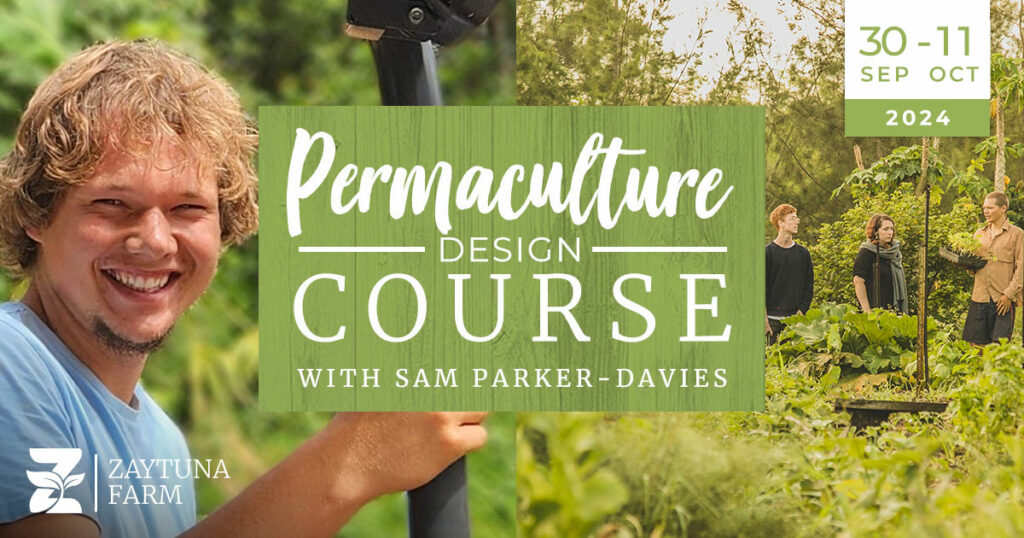
The graphic says it all. It’s now only a few days away — we hope to see you here!

Cows and Plows: Transformation Solutions
Commercial Farm Projects, Courses/Workshops, Land, Livestock, Rehabilitation, Soil Conservation, Water Harvesting — by Owen Hablutzel

Though too often vilified, both ‘cows’ and ‘plows’ have proven to be among our most effective and available tools for restoring healthy ecological and eco-agricultural systems in our landscapes. Bucking the trend in conservation that has denounced these tools from early on was Aldo Leopold – perhaps best known for his influential Land Ethic from 1948. In his earlier, groundbreaking book about working with ecosystems and wildlife, Game Management (1933), his preface made the visionary but provocative claim that “Game can be restored by the creative use of the same tools which have heretofore destroyed it — ax, plow, cow, fire, and gun.”
Comments (2)The Organic Bubble – Permaculture in El Salvador
Aid Projects, Community Projects, Demonstration Sites, Education Centres — by Serena Aurora May 2, 2013
In El Salvador Mauricio and Gloria have bought an abandoned Hare Krishna complex. With this they have created something very special. They are growing an organic garden and teaching children from their local community about living sustainably, as well as English. This project has the opportunity to create such a positive impact on the local community, by keeping the children off the streets and giving them something to be passionate about and keeping them in touch with nature. They invite volunteers from all over the world to come and help them by sharing their skills.
This film, which I shot in March 2013, is created to show the amazing work Gloria and Mauricio have accomplished and to make other people aware of this superb project. I stayed with them for a week and had a truly amazing time. I would recommend this experience to anyone.
Comments (1)The Providential Principle
Biodiversity, Economics, Health & Disease, Insects, Soil Erosion & Contamination, Water Contaminaton & Loss — by George Monbiot
Amazingly, the UK government has not defined the precautionary principle and appears to have no idea what it is.
Here’s something remarkable I stumbled across while researching my column on Monday, but did not have room to include. I hope you’ll agree that it is worth sharing.
I was trying to understand the context for the new chief scientist’s cavalier treatment of scientific evidence, in an article he wrote opposing a European ban on neonicotinoid pesticides. These are the toxins which, several studies suggest, could be partly responsible for the rapid decline in bees and other pollinators.
Comments (1)New GM Nightmares with RNA
GMOs, Health & Disease — by I-SIS
Small double-stranded RNA (dsRNAs) that aim to interfere with specific gene expression are increasingly used to create GM crops; unfortunately they have many off-target effects and can also interfere with gene expression in all animals exposed to the crops.
Genetic modification by RNA interference
Most commercially grown genetically modified (GM) crops are engineered to produce foreign proteins, but new ones are increasingly engineered to produce RNA of a special kind – double-stranded RNA (dsRNA) – that aims to interfere with the expression of a specific gene, usually to silence the gene [1] (Table 1).
Table 1 GM crops with dsRNA commercially approved or in the approval pipeline
| Product | Company | Status |
|---|---|---|
| Flav Savr tomato | Monsanto | Withdrawn from market |
| High oleic acid soybean lines G94-1, G94-19 and G168 | Monsanto | FSANZ* approved 2000 Withdrawn from market |
| New Leaf Y and New Leaf Plus Potato | Dupont Pioneer | FSANZ* approved 2001 Withdrawn from market |
| High oleic acid soybean lind DP-305423-1 | Dupont Pioneer | FSAMZ* approved 2010 |
| Herbicde tolerant, high oleic acid soybean Line MON87705 | Monsanto | approved 2011 |
| Golden mosaic virus resistant pinto bean | Embrapa* | Brazil approved 2011 |
| Papaya ringspot virus resistant papaya | Hawaii University | USA 1996, Canada 2003, Japan 2011 |
| Altered grain starch wheat | CSIRO* | Approved for field trials & feeding experiment |
*CSIRO Commonwealth Scientific and Industrial Research Organization
*Embrapa Brazilian Agricultural Research Corporation
*FSANZ Food Standards Australia New Zealand
Click for more… Comments (0)