PRI
Get our news via RSS!
Or, subscribe to posts by email. Enter address:
 

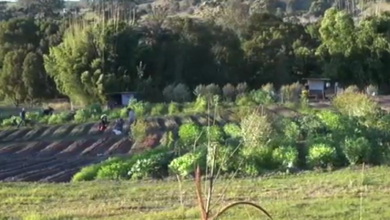
Strawberry Fields Eco Lodge 4-Week Group Internship at PRI Master Plan Site, Konso, Ethiopia

Aid Projects, Commercial Farm Projects, Community Projects, Courses/Workshops, Demonstration Sites, Education Centres — by Alex McCausland January 31, 2013

There are those points in life where it’s all up-hill struggle, when you know there’s so much to be done that it’s not even worth contemplating it all, you just have to keep your eyes on the ground in front of you and keep putting one foot in front of the other. Then there are those times when you seem to be drifting, there’s no challenge and no real satisfaction, you just roll along the path in front of you passing what goes by. Then, very occasionally, are those fantastic moments when you reach the top, the peak of a mountain, or, perhaps the foot-hill of a mountain, when you are able to stop, take a breath and admire the views of this fantastic spectacle we call life and feel a bit of satisfaction that you have achieved something, got to the peak of the challenge you were set. And that is really what makes it all worth-while. It’s those moments which we strive for, and its knowing that such moments lie ahead which keep us going, through the challenges, toil and even drudgery of every-day life.

Click for more…

Comments (0)

Laikipia Permaculture Centre – a New Centre for Kenya

Aid Projects, Community Projects, Demonstration Sites, Education Centres — by Joseph Lentenyoi January 24, 2013

PRI Kenya starts the Laikipia Permaculture Centre, with the theme: Permaculture for Food Security and Environmental Sustainability in Kenya.


School children using most of their time fetching firewood from great distances

Location: Laikipia County, North of the Great Rift Valley, Kenya

By putting up a permaculture training centre, this would translate into direct education on food growing, indigenous tree propagation leading to return of forest cover, water harvesting and conservation strategies, henceforth leading to a healthy community, self reliance and a self sustaining life that we desperately need in the developing world.

Click for more…

Comments (3)

Food For Thought – Permaculture in Schools (South Africa)

Aid Projects, Community Projects, Demonstration Sites, Education, Education Centres, Urban Projects — by Craig Mackintosh PRI Editor January 23, 2013

Watch the video above, and be inspired. I suspect that if many of our schools had been incorporating this kind of permaculture education over the last few decades, the world would today be in a far better situation, as many of the adults and young adults of the present generation would now already be eco-literate doers and changers. But, let’s not talk about what could have been, but instead do what we can to get permaculture education into a school near you….

Click for more…

Comments (4)

A Maasai Tribesman Brings Permaculture to Kenya

Aid Projects, Community Projects, Demonstration Sites, Education Centres — by Craig Mackintosh PRI Editor January 18, 2013

On my last visit to Zaytuna Farm, in May 2012, I had the great pleasure of meeting Joseph Lentenyoi, the lead person behind the establishment of PRI Kenya. We sponsored Joseph by covering his flights and putting him through our 10-week Internship, to help him get permaculture systems on the ground in Kenya and beyond. You’ll meet Joseph and hear this thoughts and learn a little about some of his work in the video above.

Joseph has a very interesting background, coming from a Maasai tribe. The Maasai are nomadic pastoralists that traditionally have no knowledge of agriculture. It’s ironic that, through learning about permaculture from a PDC that Geoff Lawton taught in Tanzania back in 2007, it’s a Maasai tribesman who is the leading force to bring permaculture demonstration sites and education to Kenya.

Click for more…

Comments (13)

Greening the Desert Internship 2012 – Greener than Ever

Aid Projects, Community Projects, Compost, Conservation, Courses/Workshops, Demonstration Sites, Education Centres, Irrigation, Urban Projects — by Salah Hammad January 15, 2013

Our one month long internship at the Greening the Desert Project (the ‘Sequel site’) just ended. Ten students arriving from seven different countries were part of the first internship to take place at the project site in the Dead Sea Valley in Jordan. This will be a journey through pictures on what Geoff, Nadia, the interns and the WWOOFers were up to.

Click for more…

Comments (7)

Love Vs. Fear

Aid Projects, Community Projects, Demonstration Sites, Eco-Villages, Education Centres, Ethical Investment, Financial Management, Village Development — by Andy Homer January 10, 2013

Imagine if we could help someone change their life for the better permanently, in under three years. Or imagine being in direct contact with the people on the ground, turning their semi-desert home back to an abundant food forest using permaculture, perhaps even going over and helping out…. Imagine being able to offer advice and expertise, or just encouragement and support, while a family solves their problems. No middlemen, no expenses taken out, no bureaucracy. If only!

Click for more…

Comments (8)

Video Spotlight on Kotare Village (New Zealand)

Alternatives to Political Systems, Commercial Farm Projects, Community Projects, Demonstration Sites, Development & Property Trusts, Eco-Villages, Economics, Education Centres, People Systems, Society, Village Development — by Craig Mackintosh PRI Editor January 9, 2013

You’ll enjoy this little video, a nice collage of thoughts and scenery and developing community integration. This is Kotare Village in the North Island of New Zealand, where PRI New Zealand (Koanga Institute) is making excellent headway into creating a model community where freedom of individual expression is combined with cohesion of collective purpose.

And, to help put Kotare village into some kind of historical context, I thought I’d juxtapose it against the video below — where you see the kind of life ‘the system’ gives us instead…. The reality of the constant struggle in the ‘daily grind’, with little to no feeling of personal satisfaction, and little hope, should make one appreciate the fantasic opportunity places like Kotare Village offer — a life with meaning, developing resilience and security, and health of body and mind. Places like Kotare Village can serve as templates to emulate as we make the long-overdue shift towards relocalising our supply lines and putting life back into our lives.

Click for more…

Comments (2)

Local Spotlight: But Don’t We Need Economic Growth to Lift the Poor Out of Poverty? (Ghana)

Aid Projects, Community Projects, Demonstration Sites, Eco-Villages, Education Centres, Food Shortages, Village Development — by Oliver Lovell December 21, 2012

This article was originally published on the Post Growth Institute Website.


Farmers planting nitrogen fixing trees on their farms

As a group challenging the growth paradigm, one of the most common questions that we hear is, ‘But don’t we need economic growth to lift the poor out of poverty?’. While growth has been successful to this end in certain ways, there are also some unwelcome consequences of growth. We prefer to ask other questions, like ‘Do we need to target economic growth to help those in need?’ and even better, ‘How are people currently breaking the poverty cycle in sustainable and inspiring ways?’. This piece demonstrates how a group of incredible people are doing just that.

Click for more…

Comments (1)

Permaculture Forest Garden, Badagry, Lagos State, Nigeria

Aid Projects, Community Projects, Deforestation, Demonstration Sites, Education Centres, Food Shortages, Village Development — by Andrea Joswig

Since 2011 the Adunni Susanne Wenger Foundation in Nigeria, in Cooperation with the German NGO SONED Brandenburg e.V., built up the Environmental Education Centre called Permaculture Forest Garden at Gberefu Island, in Badagry, Lagos State. Beside the sustainability of the local environment, the project’s focus is on health care, food security, nonviolent communication and the support of democratic processes. Permaculture Forest Garden is supported by the German Federal Ministry for Economic Cooperation and Development (BMZ) and The German Foundation Stiftung Nord-Süd-Brücken. The beneficiaries of the project are the inhabitants of the surrounding settlements, students, teachers, farmers and landowners from Badagry and Lagos.

Click for more…

Comments (0)

Permaculture Meets Mozambique

Aid Projects, Community Projects, Demonstration Sites, Education Centres, Land, Project Positions, Village Development — by Lily Bunker December 14, 2012

In an isolated corner of northern Mozambique great things are being done. A demonstration farm run by the Manda Wilderness Agricultural Project, an offshoot of a local trust organization and set in the picturesque region of Manda Wilderness, is held together by the efforts by five local staff and an occasional international volunteer. The farm acts as a platform for teaching villagers agricultural techniques and serves as an experimentation ground for testing new farming methods and yielding a new variety of crops.

I came to Manda Wilderness in early October as a volunteer, and was immediately impressed by the scale of the farm and the commitment of the staff. After working on other projects within the sixteen communities of the Manda Wilderness region, I have recently spent my time working directly at the farm, developing projects based on methods of permaculture with other volunteers as we strive to increase the farm yield in sustainable and efficient ways.

Click for more…

Comments (3)

A Journey of Transition: Becoming a Professional Permaculture Designer – Part 2

Education Centres, General — by Dan French December 8, 2012

OK, here we go, the second installment of this series regarding my journey to become a professional permaculture designer. In my last article I touched on who I am, what I am doing and why, and discussed some general topics which included defining my services, networking and, on a very general level, the importance of examining price structures for services. As a result, I was contacted by a nice guy by the name of Scott Mann who runs a great podcast series called The Permaculture Podcast. It turned out we had a lot in common. He had also travelled the road of becoming a professional designer, and although he ended in a different stream of permaculture, the process he undertook led him to the path he is now on, that being sharing important permaculture information from various experts to a global audience. A job, I might add, that he’s doing very well! So, regardless of the outcome, the fact he took steps to becoming a designer got him to where he is now. There’s a lesson in that.

Anyhow, during the interview Scott asked me about obstacles I have encountered so far in my professional development and ways in which I have addressed these. It was a good question and I thought this might be a handy topic to concentrate on this time around.

When I reflect on the process so far, although there have been numerous obstacles, the most notable for me have been psychological — specifically those of commitment and confidence. I touched on these two hurdles in my first article but thought they warranted a bit more explanation as for me they have been so significant. My experiences so far are as follows.

Click for more…

Comments (2)

Reflections on a Tropical Island PDC with Rhamis Kent

Courses/Workshops, Demonstration Sites, Education Centres — by Peter Axisa November 30, 2012


Photo: Peter Axisa

The sun goes down on another PDC and another 11 students are glowing and growing. This time the sun sets on a little mystical island in the southern reaches of Thailand, a little island called Koh Phangan. Their teacher and inspiration was, and still is, Rhamis Kent (author profile, WPN profile), a magnificent PRI-accredited teacher and now a great friend. On behalf of the class, I would like to thank Rhamis for our new outlook on life and the empowerment to know we can make a change. But more about Rhamis in a bit, we’ll save the best till last and head back to that little mystical island that a few of us will always remember.

Click for more…

Comments (3)

My Experience of Permaculture Aid Work in Ethiopia

Aid Projects, Community Projects, Demonstration Sites, Earth Banks, Education Centres, Land, Plant Systems, Rehabilitation, Soil Conservation, Swales, Village Development, Water Harvesting — by Sabrina Faubert November 22, 2012

I’m not sure it’s possible, looking back now, to say exactly what I was expecting when I hopped on that plane and flew to Ethiopia for an internship at Strawberry Fields, but one thing I am sure of is that it’s been one of the most transformative, edifying experiences I’ve had in my life.

Click for more…

Comments (2)

From PRI Intern To Caribbean PRI Master Plan For Barbados!

Aid Projects, Community Projects, Demonstration Sites, Education Centres — by Lorraine Ciarallo November 19, 2012

To say the very least, I enjoy a good challenge and a thrilling adventure, but my visit to Barbados was a magical journey beyond my wildest expectations. But before I get there, let me take you back a bit.

Click for more…

Comments (4)

Establishing a Permaculture Center in Macedonia – Your Support is Welcome!

Community Projects, Demonstration Sites, Education Centres, Village Development — by Ognen Oncevski November 16, 2012

This article is not just a call for a support, it is also a message of gratitude to all of you who shared your stories on this website and gave us inspiration to move forward and aim towards the creation of a more human world.

Before I get to the main point of this article, I would like to tell you about our beginnings. It all started when a bunch of friends who share a common vision for a world in which humans live in harmony with nature decided to get together and make their vision come to life. We formally joined an organization called The Green Ark. It was exactly five years ago when we decided that we wanted to do something more, to transform our revolt into organized action which would be useful for our community. However, our beginnings were not all that glamorous. Back then, our knowledge of the permaculture ethics and principles came solely from reading books and watching videos like The Global Gardener series, Establishing a Food Forest, etc. And since none of us had taken a Permaculture Design Certificate (PDC) course, we were a bit apprehensive, but very excited at the same time, when we embarked on our first project – to start an urban garden.

Click for more…

Comments (7)