PRI
Get our news via RSS!
Or, subscribe to posts by email. Enter address:
 

Swale and Garden Improvements

Courses/Workshops, Demonstration Sites, Education Centres, Land, Swales — by Zaia Kendall June 20, 2012

by PRI Sunshine Coast

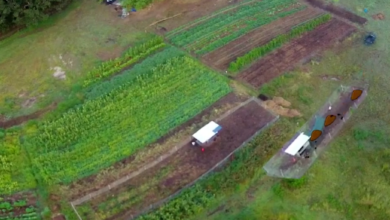
A swale dry rock wall built by WWOOFers and revamping some garden beds.

To further improve our kitchen garden swales, we have rock-walled a number of them. This stops erosion of the garden beds, since soil falls or is washed down into the swales. It also creates a beautiful frog and lizard habitat, and levels the garden bed, instead of having it on a slope.

By using the combined resources of WWOOFers and our creek rock, and PDC student Andrew’s experience in rock walling (he showed the WWOOFers how to build the dry rock wall), the swale rock wall took only three days to build. This included getting rock from our creek bed, sorting the rock and laying it. It has made the garden bed more functional and more productive, and as we build the soil and raise the garden beds we can add more rocks to the rock wall to keep all the beautiful soil where it belongs — in the garden bed.

Click for more…

Comments (0)

Consultancy: Who Needs It? Why Do It? Are You Ready For It?

Building, Energy Systems, Land, Retrofitting, Waste Systems & Recycling — by Bob Nekrasov June 14, 2012


Photo © Craig Mackintosh

It turns out that very few of those that do a PDC end up being consultants. It took me a while to actually become a paid consultant and I’ve only been doing it for a little while. I took so long to become one as I truly thought everyone who’d done a PDC would become a consultant and that I would just end up being ‘another consultant’. Wow, was I wrong! Of course, not everyone has to be one, many of us have other interests to pursue, but there are lots of us who do want to be consultants, but become defeated by things like a lack of knowledge, experience, confidence and other obligations (family, secure job, etc.).

What I decided to do for you my friend was to set myself up as an example of what is possible. So at the age of 33, with second child in wife’s belly, I decided to take the plunge and become a full time consultant. We had little money — nothing that would help establish a business. I did, well, jump into it head first. This could be bad advice as I am not into ruining lives! Well, maybe a little bit and for the best, wink wink.

Click for more…

Comments (24)

Perennial Plants and Permaculture

Conservation, Food Forests, Food Plants - Annual, Food Plants - Perennial, Food Shortages, Land, Plant Systems, Rehabilitation, Salination, Soil Biology, Soil Composition, Soil Conservation, Soil Erosion & Contamination, Water Contaminaton & Loss — by Angelo Eliades June 6, 2012


Rhubarb

Currently, approximately 80% of the food crops grown in the world are annual plants, and it’s been this way for quite some time. Perennial plant food crops are pretty much in the minority in terms of how the human race derives its nutrition.

Permaculture strongly emphasises the importance of using perennial plants in our food production systems. When we consider the permanent agriculture aspect of permaculture, it should be apparent that we would need to utilise perennial plants to construct a permanent system,  rather than using  annual crops to create temporary systems, which are there one season, and return to bare earth the next.

The preference for perennial plants is stated explicitly in the seventh permaculture design principle — Small Scale Intensive Systems. It describes the use of perennial plants instead of annual plants as one of the features that differentiates permaculture small scale intensive systems from either conventional commercial or peasant farming systems.

To many people, the reason we use perennial plants is simply because they don’t need to be replanted each year, and don’t die down each year, saving us a lot of effort digging, sowing seeds, and cleaning up at the end of the season — and then they simply leave their understanding at that.

Click for more…

Comments (69)

Geoff Lawton’s Zaytuna Farm Video Tour (Apr/May 2012) – Ten Years of (R)Evolutionary Design

Animal Housing, Biodiversity, Biological Cleaning, Bird Life, Building, Commercial Farm Projects, Compost, Conservation, Consumerism, Courses/Workshops, Demonstration Sites, Education, Education Centres, Energy Systems, Fencing, Food Forests, Food Plants - Annual, Food Plants - Perennial, Irrigation, Land, Livestock, Nurseries & Propogation, Plant Systems, Potable Water, Rehabilitation, Society, Soil Conservation, Structure, Trees, Village Development, Waste Systems & Recycling, Water Harvesting — by Craig Mackintosh PRI Editor June 1, 2012


Paradise Dam, April 2012, from the now-climaxing food forest
Photos © Craig Mackintosh (unless otherwise indicated)


Zaytuna Farm Video Tour, duration 41 minutes
Note: Switch YouTube player to HD if your internet connection allows

Having spent the last few years seeking to establish and assist projects worldwide, and hearing some readers requesting more info on our own permaculture base site, I thought it high time I take a moment away from promoting other projects to shine a little light on our own work!

It had been a long time since I last visited Zaytuna Farm. Arriving in April 2012, more than two and a half years after my September 2009 visit, I was somewhat taken aback…. Back in 2009 the farm could somewhat be described as an unruly child — full of energy and enthusiasm, and flush with life, but not at all mature. Now, as I see Geoff Lawton’s vision for the property being played out more fully, we could compare the farm to more of a blossoming and beautiful teenager, still fresh in youth, but demonstrating a clearer sense of direction.

Geoff’s long term strategies are becoming evident, and it really is a sight, and site, to behold!

Click for more…

Comments (22)

John D. Liu’s Green Gold Documentary – How the West (and East, North and South!) Could Be Won

Aid Projects, Community Projects, Conservation, Consumerism, Dams, Deforestation, Demonstration Sites, Food Shortages, Global Warming/Climate Change, Irrigation, Land, Plant Systems, Population, Potable Water, Regional Water Cycle, Rehabilitation, Society, Soil Biology, Soil Conservation, Soil Erosion & Contamination, Swales, Terraces, Trees, Village Development, Water Contaminaton & Loss, Water Harvesting — by Craig Mackintosh PRI Editor May 24, 2012

As most of our readers will know, John D. Liu caught a vision years ago, and, thankfully, he ran with it. We’ve shared John’s excellent media work before (see here and here), and today have the pleasure of doing so again….

This new video, Green Gold, was first aired last month on Dutch TV, and will be shared at the Rio+20 United Nations Conference on Sustainable Development (to a captive audience of influential representative delegates during their dinner!), which is being held next month in Brazil (20-22 June 2012).

The video takes you to China, Jordan (more background on the PRI Jordan project here), Ethiopia, Rwanda and Bolivia, and features the PRI’s own Geoff Lawton (and a cameo appearance from Nadia!), who adds impetus and technical know-how to John’s impressive toolbox, as well as the ‘Permaculture Princess‘ (Princess Basma bint Ali of Jordan), and others.

It’s the story of healing landscapes at scale, and, with it, restoring life, livelihoods, security and a future.

Click for more…

Comments (6)

Getting Kids Into Gardening, Part IV: Creativity in the Garden

Education, Food Plants - Annual, Food Plants - Perennial, Land, Medicinal Plants — by Anthea Hudson May 23, 2012

Inspiring our children to develop an enthusiasm for gardening is a wonderful gift we, as parents or caregivers, can give them. This theme revolves around using the garden and its produce as an outlet for creativity. The following ideas will hopefully help give you some starting points for helping your children make the most of the garden in a myriad of ways. Use just one idea, combine several, or come up with your own ideas.

Mazes

Children are often fascinated by mazes. They can create their own living mazes, either on a miniature scale with low growing plants, or a full-scale hedge maze, if you have the room and can afford the plants. Get your kids to create a simple maze design on paper first (graph paper might be handy) and then lay it out on the ground using tent pegs or stakes and string. Alternatively, they could lay little stones or sticks out to mark the design.

Click for more…

Comments (5)

Swales: The Permaculture Element That Really “Holds Water”

Conservation, Dams, Food Forests, Irrigation, Land, Swales, Water Harvesting — by Rob Avis May 16, 2012

by Rob Avis

Michelle, Rowen and I were driving home from a vacation in the mountains when we passed by a swale on a farmer’s field in the middle of Alberta cattle country. Naturally, it piqued my curiosity and I had to stop the car to investigate. It was such a great example of how this simple technique can catch and store water on a large scale, we decided to make a short video about it….

What’s a Swale?


Rob walking along a swale after a huge rain
event at the Permaculture Research Institute
of Australia

Simply put, swales are water-harvesting ditches, built on the contour of a landscape. Most ditches are designed to move water away from an area, so the bottom of the ditch is built on a modest slope, usually between 200:1 to 400:1.

Swales, however, are flat on the bottom because they’re designed to do the opposite; they slow water down to a standstill, eliminate erosion, infiltrate the surrounding area with water, and recharge the groundwater table. When water moves along the flat bottom of a swale, it fills it up like a bathtub — that is, all parts of the bath tub fill at the same rate. The water in a swale is therefore passive; it doesn’t flow the way it would on a slope.

Click for more…

Comments (11)

Following McDonalds’ Example Towards a Healthy Diet

Food Plants - Annual, Food Plants - Perennial, Health & Disease, Land — by Campbell Wilson May 11, 2012


Images copyright Cam Wilson 2012

Who would have thought we could follow McDonalds’ business model to get our kids to eat healthy food?

Click for more…

Comments (3)

Trellises For Your Summer Food Crops

Food Forests, Food Plants - Annual, Land, Plant Systems, Urban Projects — by Sunny Soleil March 29, 2012

If you are thinking of planting tomatoes, cucumbers, winter squash, peas, beans or any vining plant, it’s worth considering growing them vertically to save space in your annual garden area.

Permaculture principles urge us to create no waste and to find multiple functions for whatever we do.

Instead of rushing to your garden center to purchase ready made products, there are many innovative and ecological ways to help your plants grow to their best, and to save space while keeping your produce off the ground and more protected from predators and rot.

The Native Americans used the 3-sisters method, growing beans, corn and squash together. The beans climb up the corn and the squash spreads out to create ground cover. However, if you want to save space you might be advised to use alternative ground cover and help your viners trail upwards.

Four ideas for trellises

Click for more…

Comments (1)

Geospatial Analysis and Living Urban Geometry

Building, Land, Society, Urban Projects, Village Development — by Nikos A. Salingaros March 27, 2012

By Pietro Pagliardini (1), Sergio Porta (2) & Nikos A. Salingaros (3).

Chapter 17 in: Bin Jiang and Xiaobai Angela Yao, Editors, Geospatial Analysis and Modeling of Urban Structure and Dynamics, Springer, New York, 2010, pages 331-353.

(1) Pagliardini Rupi Andreoni & Gazzabin, Studio d’Architettura, Via Eritrea 9, 52100 Arezzo, ITALY.
(2) Urban Design Studies Unit, University of Strathclyde, 131 Rottenrow, Glasgow G4 0NG, UK.
(3) Department of Mathematics, University of Texas at San Antonio, One UTSA Circle, San Antonio, Texas 78249, USA.

Abstract

This essay outlines how to incorporate morphological rules within the exigencies of our technological age. We propose using the current evolution of GIS (Geographical Information Systems) technologies beyond their original representational domain, towards predictive and dynamic spatial models that help in constructing the new discipline of “urban seeding”. We condemn the high-rise tower block as an unsuitable typology for a living city, and propose to re-establish human-scale urban fabric that resembles the traditional city. Pedestrian presence, density, and movement all reveal that open space between modernist buildings is not urban at all, but neither is the open space found in today’s sprawling suburbs. True urban space contains and encourages pedestrian interactions, and has to be designed and built according to specific rules. The opposition between traditional self-organized versus modernist planned cities challenges the very core of the urban planning discipline. Planning has to be re-framed from being a tool creating a fixed future to become a visionary adaptive tool of dynamic states in evolution.

Click for more…

Comments (3)

Let’s Explore Ridley Grove Community Garden! (Adelaide, South Australia)

Community Projects, Land, Society, Urban Projects, Village Development — by Anthea Hudson March 24, 2012

What do you do with an old church car park? Turn it into a community garden, of course! And that’s how the Ridley Grove Community Garden — a child, pet and disabled person friendly garden in the Adelaide suburb of Woodville Gardens — came into being.

The first thing they did was to bring in the experts to help clear the grass… a herd of hard working, hungry goats! Now that’s chemical free weed control… with built in fertiliser! Next came the soil building, with lots of compost and mulch, which turned a compacted surface of gravel and dolomite into fertile, productive garden beds.

Click for more…

Comments (6)

A Recipe for a Hugelkultur Raised Bed

Compost, Fungi, Land, Rehabilitation, Soil Biology, Soil Composition — by Sunny Soleil March 23, 2012

I’ve been wanting to do a hugelkultur bed ever since I saw an article about a village store garden where people could walk around these really tall raised beds picking their veggies without bending.

Hugelkultur is a Central European-style raised bed which uses rotting wood as its foundation. Toby Hemenway mentions it in Gaia’s Garden, offering the hot tip that he can start potatoes a month early in this kind of bed. The hugelkultur raised bed can be built in many different ways, towering as high as you can reach or in a deep trench so that the planting surface is more or less level with the ground.

Click for more…

Comments (3)

Constructed Wetlands Treat Waste Water with Weeds

Animal Forage, Biological Cleaning, Land, Plant Systems, Waste Systems & Recycling, Waste Water, Water Contaminaton & Loss — by Mark Feineigle March 22, 2012

Overview

Effluent processing all over the world requires large amounts of energy and/or chemicals to treat the waste water, or the waste water is improperly filtered before being returned to the environment. There are a number of solutions to lessen the waste water load while at the same time producing a net benefit. Systems that include the collection of urine to be used as fertilizer and methane digesters that create fuel from feces [see 'Biogas' section at bottom of the just-linked article] are a couple of such solutions. Another solution — constructed wetland filtration systems for homes, communities, and industrial sectors — are efficient in both processing ability and energy requirements.

These artificial wetlands provide a near zero energy input way to treat local effluent with no negative side effects. The process is free of both chemicals and odours, provides habitat for wildlife, increases the diversity and aesthetics of any site, and, depending on the toxicity of the inflowing effluent, can potentially create a yield, such as fodder for livestock.

Click for more…

Comments (2)

Integrating Garbage in the Landscape

Eco-Villages, Land, Waste Systems & Recycling — by Keveen Gabet March 21, 2012


Filling tyres with trash bricks

We recently spent a month volunteering in Indonesia, on the beautiful and luxurious island of Samosir. We lent our hands to a small but emerging eco-village situated right on the shore of Lake Toba. At Eco-Village Samosir there are many projects underway, from mulching around the 3,000 newly planted trees to creating a food forest to feed the growing number of volunteers.

During our visit, we noticed that a major cause for action in Silimalombu (population: 200) was waste management and recycling. Granted this is a national issue, world wide even, but I guess for us it was more an in-your-face issue to tackle as the image of an eco-village doesn’t usually exist with a litter mentality. The community decided to ‘cope’ with the myriads of plastic bags and other garbage by supplying each home with waste bins and adding receptacles here and there in which they later burn their trash. So although the quaint village appears clean and tidy, the kids, dogs and local fishermen pay the price by inhaling toxic fumes twice a week. Not everyone has adopted the ‘dump and burn’ approach; some simply hide all their trash on the slopes of the lake, where, to this day, few people can see.

Click for more…

Comments (17)

Establishing a Permaculture Project in Southern Portugal

Land — by Frances Stephens

Having been a self-sufficient farmer in the Northern Isles of Scotland and having worked for ecological charities that have helped to build permaculture gardens in arid lands around the world, I have now been living in Southern Portugal for the past fifteen years. Here we have witnessed the weather become more and more erratic and we’ve watched as European Governments try to snatch yet more money from the working people with no regard for the damage done to the natural world.

I decided that now was indeed the time to ‘Make a Garden’.


Gaia-Atlantis Peace Garden

Click for more…

Comments (7)